Casino Promotion Design Uncovered: Key Influences on Poker and Bingo Offers
Ines Perry · Sep 26, 2026
Casino Promotion Design Uncovered: Key Influences on Poker and Bingo Offers
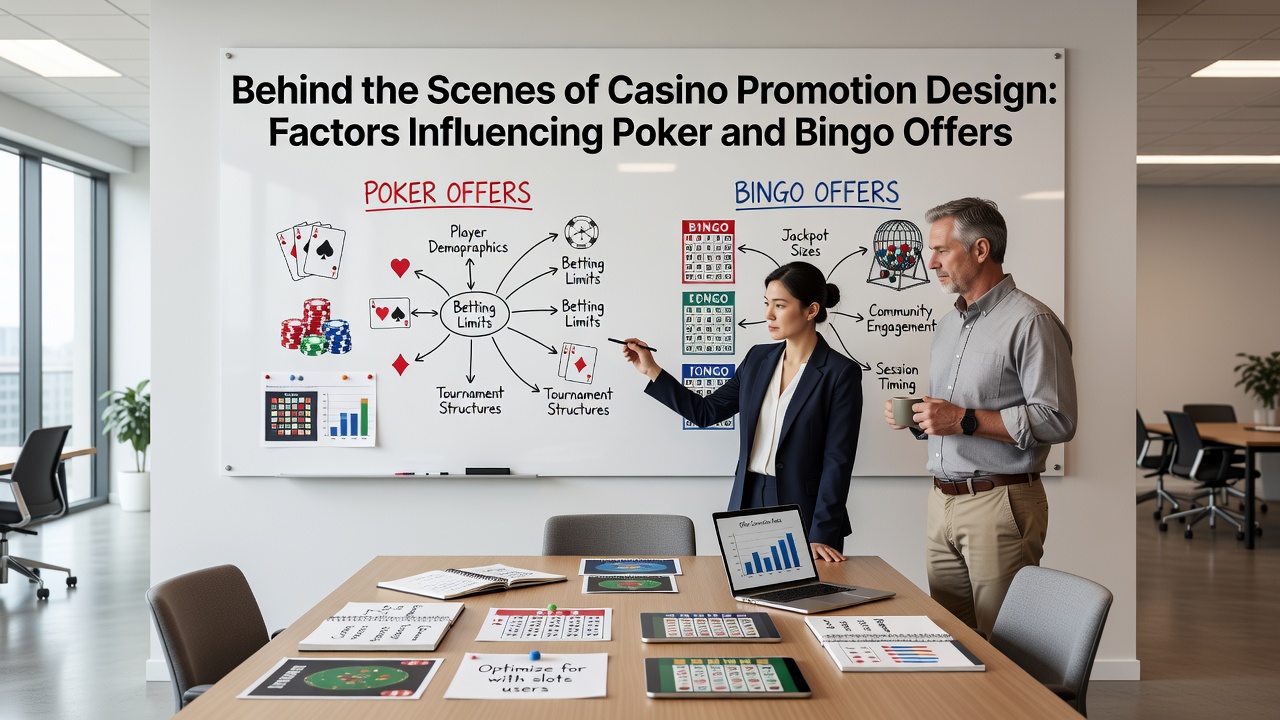
Design teams at online casinos spend considerable time crafting promotions for poker and bingo because these games attract distinct player groups with different spending patterns and engagement styles; regulatory frameworks from various jurisdictions shape the boundaries of what offers can include while data analytics guide decisions on bonus amounts, wagering conditions, and game-specific incentives.
Regulatory Pressures Shape Offer Structures
Legal requirements vary widely across regions, and operators adjust their poker and bingo promotions accordingly to stay compliant; for instance, rules around bonus transparency and player protection often dictate how wagering requirements appear in fine print. In Canada the Alcohol and Gaming Commission of Ontario sets standards that influence how sites present deposit matches for poker tournaments, whereas Australian authorities through the Australian Communications and Media Authority monitor advertising claims that affect bingo no-deposit offers. These constraints push design teams to build promotions that meet multiple overlapping rules without limiting appeal to players.
September 2026 brings scheduled updates to several international reporting standards that will require clearer disclosure of bonus expiration dates, and teams already test revised templates to ensure poker and bingo campaigns remain effective once the changes take effect.
Data Analytics Drive Personalization Choices
Casino operators rely on player tracking systems that record session length, game preference, and deposit frequency, then feed this information into promotion algorithms; the resulting offers for poker often emphasize tournament entry credits or rakeback percentages because data shows these features retain mid-stakes players longer. Bingo promotions, by contrast, tend to feature free ticket bundles or deposit-linked number packs because analytics reveal that bingo audiences respond more strongly to immediate play opportunities than to long-term loyalty multipliers.
Research from the University of Nevada's gaming studies department indicates that segmented campaigns based on behavioral clusters increase repeat deposits by measurable margins across both game types, yet the exact segmentation variables differ sharply between poker and bingo cohorts.
Game Mechanics Influence Bonus Types
Poker promotions must account for the skill element and multi-player dynamics that define the game, so designers frequently incorporate leaderboard challenges or sit-and-go ticket giveaways that encourage ongoing participation without guaranteeing outcomes. Bingo offers focus instead on session volume because the game relies on random number generation and fixed ticket pricing, leading teams to create batch-ticket bundles or progressive jackpot triggers that align with short, frequent play sessions.

These mechanical differences mean the same bonus template rarely works for both products; a 100 percent deposit match that suits poker tournament players often underperforms for bingo unless it includes extra ticket allocations that match the game's pacing.
Competitive Landscape and Timing Factors
Market monitoring tools track competitor promotions in real time, and design teams respond by adjusting their own poker and bingo offers to maintain visibility; during major sporting events or holiday periods, poker bonuses frequently expand to include satellite entries into larger tournaments, while bingo sites increase ticket values or add themed rooms to capture seasonal traffic spikes.
Industry reports from the European Gaming and Betting Association highlight that synchronized release windows across multiple operators can reduce the impact of any single promotion, prompting design groups to experiment with staggered launch dates and region-specific variations.
Technology Tools and Testing Protocols
Modern promotion platforms integrate A/B testing modules that allow rapid comparison of creative assets and bonus parameters; teams run controlled experiments on small player segments before scaling successful poker or bingo variants, measuring metrics such as conversion rate, average session time, and bonus redemption speed. Automated compliance checkers scan new offer language against regulatory databases to flag potential issues before launch, reducing the risk of post-publication revisions.
Conclusion
The creation of poker and bingo promotions involves coordinated input from compliance specialists, data analysts, game designers, and marketing strategists who balance regulatory limits with player preferences and competitive pressures. As new reporting requirements approach in September 2026 and analytics capabilities continue to advance, the behind-the-scenes process will likely grow more precise while remaining rooted in the distinct characteristics that separate poker from bingo.