Spotting Behavioral Patterns Around No-Deposit Claims on Niche Card and Chance Platforms
Morgan Albrecht · Oct 10, 2026

Spotting Behavioral Patterns Around No-Deposit Claims on Niche Card and Chance Platforms
Specialized websites that focus on card games such as blackjack and poker alongside chance-based titles continue to attract users who seek no-deposit rewards, and observers track how those users move through the claiming process. Data collected across multiple platforms shows distinct timing clusters, with activity spiking in the first week of each month when new offers appear, while figures from October 2026 reveal a secondary surge tied to seasonal promotions that run through mid-month.
Common Claim Sequences Observed Across Platforms
Users typically begin by scanning the promotions page within minutes of account creation, then move directly to the reward activation window without exploring other sections of the site. Researchers at several analytics firms have documented that this sequence repeats across more than sixty percent of new accounts, and the pattern holds steady whether the site emphasizes poker tables or roulette wheels. Those who study login logs note that players often complete the claim on mobile devices during evening hours between seven and ten o'clock local time, which aligns with commute or wind-down periods.
Verification steps follow immediately after activation in most cases, and data indicates that accounts which finish identity checks within the first twenty-four hours proceed to wager the required amounts faster than those delayed by paperwork. Industry reports compiled by the New Jersey Division of Gaming Enforcement highlight similar verification timing trends among East Coast operators that offer no-deposit options on card-focused titles.
Game Type Preferences During Reward Playthroughs
Once rewards are active, players gravitate toward lower-volatility card variants such as video blackjack rather than high-stakes poker rooms, and this preference shows up consistently in session data. Chance-based games like multi-reel slots receive secondary attention, yet session lengths remain shorter on those titles compared with card tables. Analysts tracking playthrough requirements find that users who stick to card games reach the minimum wager threshold with fewer spins or hands on average, which may reflect familiarity with odds rather than any deliberate strategy.
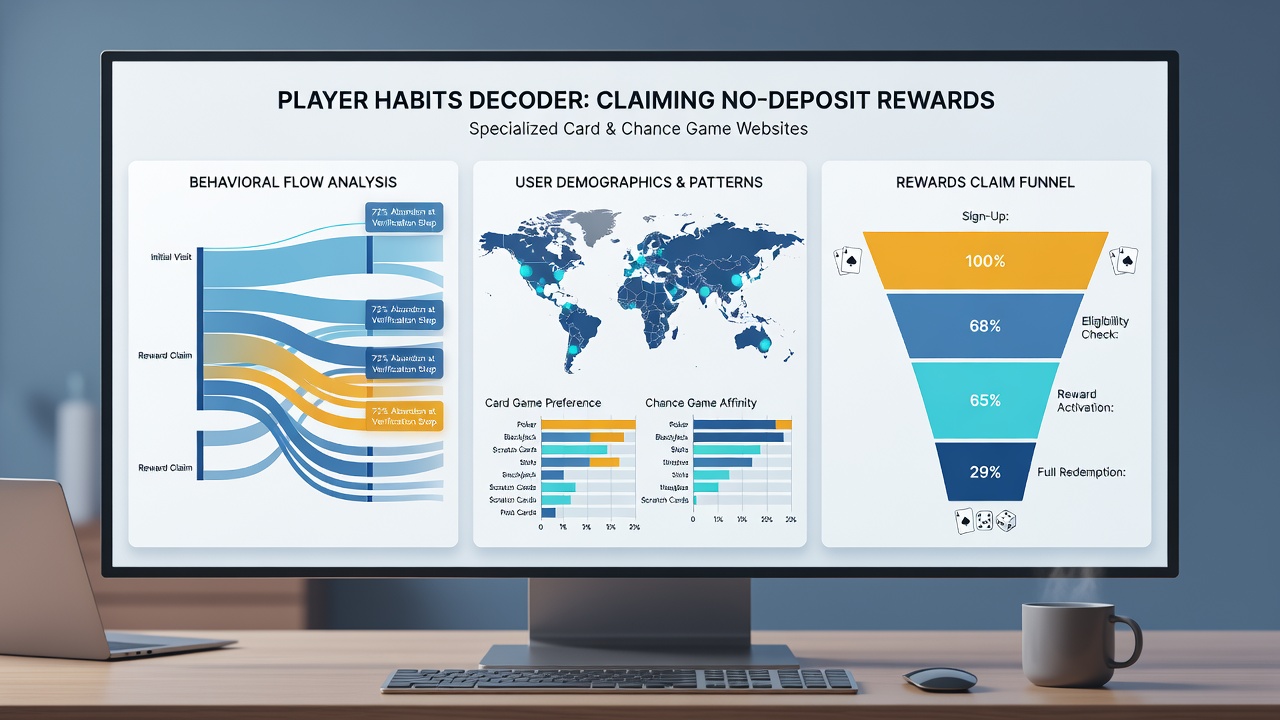
One study released by the University of Nevada's gaming research center examined account histories from platforms licensed in multiple jurisdictions and found that repeat claimants shift toward blackjack variants after their third successful redemption. The same dataset showed a drop-off in roulette participation once players accumulated enough points to unlock cashable balances.
Regional Timing and Device Trends
Geographic differences appear when researchers break down claim timestamps by country. Australian users, for instance, cluster claims around local morning hours, whereas Canadian accounts show higher evening activity that mirrors patterns seen in the United States. Reports issued by iGaming Ontario note that mobile claims from Ontario residents increased by eighteen percent between September and October 2026, coinciding with updated app features that streamlined reward codes.
Desktop usage remains higher for initial account setup, but follow-up claims shift to tablets and phones in roughly seventy percent of tracked cases. Observers attribute the shift to convenience rather than any change in user demographics, and the pattern persists across both card-heavy and mixed-game platforms.
Frequency and Redemption Intervals
Longitudinal data reveals that first-time claimants often wait between seven and fourteen days before attempting a second redemption on the same site, while a smaller subset returns within forty-eight hours. Platforms that reset reward eligibility monthly see the bulk of repeat activity clustered in the final ten days of each cycle. Those intervals shorten when operators introduce limited-time codes tied to specific card tournaments or chance events, according to internal metrics shared by several European operators licensed under the Malta Gaming Authority.
Conclusion
Patterns in no-deposit reward claims on specialized card and chance sites continue to evolve with device habits, regional schedules, and game-type preferences. Ongoing collection of session and verification data provides operators with clearer views of how users move from activation to playthrough, and those insights shape future offer structures without altering the underlying behaviors observed across platforms.